
Searching the Cook County Court Docket
Start at Minnesota Court Records Online. It is the statewide register that carries the Cook County court docket. The service goes by MCRO, and you can reach it at Minnesota Court Records Online. A name search covers all of Minnesota. Pick Cook County from the location filter when the results sprawl. A case number works best of all. For a traffic ticket, the citation number is often the quicker key. You can also search by attorney when you know who represents the case. One caution: MCRO is a public lookup tool, not a certified court record.
Dig out your newest Cook County paper first. A notice, citation, or court order often carries the file number and the hearing type. That saves time. Name-only searches can mislead. Spellings, middle names, and status filters all affect what comes back. If a docket entry matters for an upcoming Cook County appearance, set it beside the latest court notice. Where the two disagree, call Court Administration before relying on either.
- Open MCRO Case Search and accept its terms of use.
- Select Name, Case Number, Citation Number, or Attorney, then choose Cook under specific county court locations when needed.
- Enter the available information and use Find. For a person-name search, repeat a tight search with and without a middle name or initial if necessary.
- Open the matching case number and read Case Details, including the Register of Actions, Hearings, Case Events, and Dispositions.
- Use the courthouse terminal or Court Administration when a public record is absent, needs a certified copy, or requires confirmation.
Note: Treat a remote docket result as a first step. For anything that matters, confirm it against the current Cook County court record. The court's own notices and confirmations settle any doubt.
Cook County MCRO Register Searches
MCRO pulls District Court data from across Minnesota. Its location filter keeps a Cook County court docket search anchored to the local venue. Open a case and you land on the Case Details view. That view is the state's Register of Actions. It can show parties and their roles, events, hearings, dispositions, financial information, and public documents where available. MCRO also splits its tools apart. Case Search, Document Search, Hearing Search, and Judgment Search each answer a different Cook County question. Pick the right one rather than treating them alike.
The official MCRO overview spells out what this public service covers and where it stops. It is the state's remote access system. That makes it the doorway into a Cook County Register of Actions, not anything Cook County itself operates.
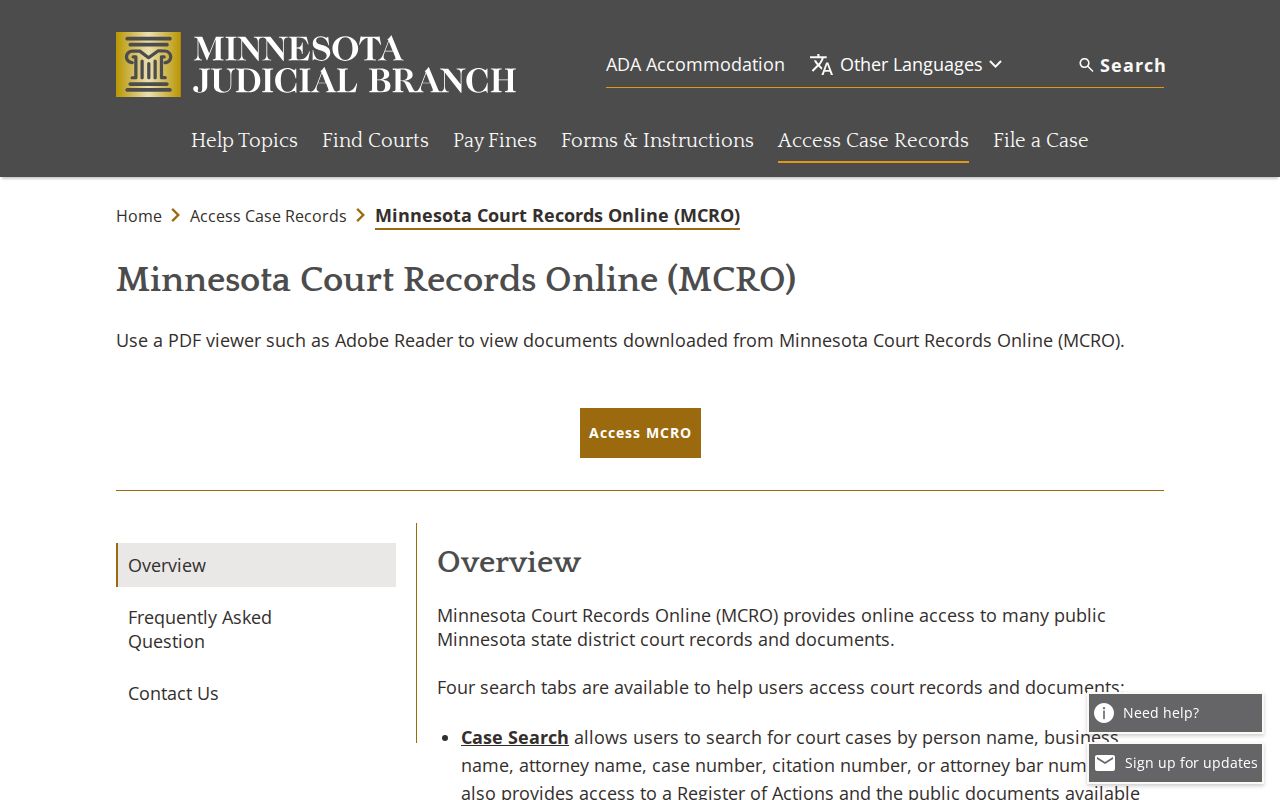
That access context matters for Cook County docket work. Remote documents and public case details do not always share the same availability, so a gap online is not a gap in the file. And after a statewide search, keep the Cook County location filter on to narrow the result to the right venue.
| MCRO search choice | Useful Cook County input | What it helps locate |
|---|---|---|
| Name | Last and first name, with optional middle name | Public cases associated with a person or business |
| Case Number | Complete court file number, with or without dashes | A specific Register of Actions and Case Details |
| Citation Number | Complete citation number | A filed traffic or payable citation case |
| Hearing Search | Name, case, judicial officer, attorney, date, and Cook County location | Public hearing information |
Inside a Cook County Court Docket
A Cook County court docket is more than a caption at the top of a file. Open a case in MCRO. You may see the court file number, the case category, the filing date, court location, status, judicial officer, parties, and related cases. The chronological Case Events section is the Register of Actions itself. Every dated filing, notice, hearing, order, payment, and other court activity lands there in order. One caution: a listed event does not guarantee the underlying document is available remotely.
Read the newest Cook County entries in context. One line at a time will not do. A hearing entry shows the scheduled date, time, location, type, and status where posted. A disposition is different. It shows a recorded outcome and its date. Financial Information can reveal an entered balance or payment activity. Criminal cases may add Charges, Interim Conditions, or Bond/Bail Activity sections when public. Sections with no data may simply not display at all.
| Case number | Minnesota file number built from county, case type, year, and sequence. |
|---|---|
| Case Information | Caption, category, file date, Cook County location, status, and assigned officer where available. |
| Case Events | The chronological Register of Actions for filings, notices, and recorded activity. |
| Hearings | Date, time, location, type, and hearing status when public. |
| Dispositions | Recorded resolution and date, not merely a case category. |
| Documents | Public documents when remote access is allowed; not a substitute for the complete file. |
Cook County Court Record Access
Two channels serve Cook County court record access. They are not equal. MCRO is free and convenient for a public Register of Actions from anywhere. The Minnesota Public Access Courthouse terminal, located in the Cook County courthouse, gives the fuller electronic view of public District Court records. That view includes material that never appears remotely. Cook County Court Administration rounds things out with locally stored paper files and certified copies.
The official state access-records page draws a line. It separates remote electronic access from inspection where the records are kept. That line matters when an older file, a public document, or a restricted result fails to show up online. Original court files stay with the office that holds them. They are not removed for inspection.
| Channel | Best use | Important limit |
|---|---|---|
| MCRO remote search | Public case, hearing, judgment, and document searches | Remote access excludes or limits several record categories |
| Cook County courthouse terminal | More complete public electronic court access | Still subject to public-access rules and confidentiality limits |
| Court Administration counter | Locally stored paper records and copy questions | Confirm current request and delivery procedures first |
| Certified copy request | Officially certified document needed from the custodian | MCRO results and downloads are not certified |
Note: When a Cook County court record is important or time-sensitive, go to the courthouse terminal or Cook County Court Administration directly. Those two channels are the practical fallback.
Courts That Keep Dockets in Cook County
Cook County runs one Minnesota District Court location. Minnesota has a unified trial court. Civil, family, probate, juvenile, criminal, traffic, and conciliation matters all flow through the same District Court structure. They share the same Court Administration. There is no separate Cook County justice court, county court at law, or Grand Marais municipal docket. The case category plus the Cook venue tells you where a filing belongs.
The official Cook County judicial directory is the reference for court structure. For a particular proceeding, though, the Register of Actions remains the record worth searching.
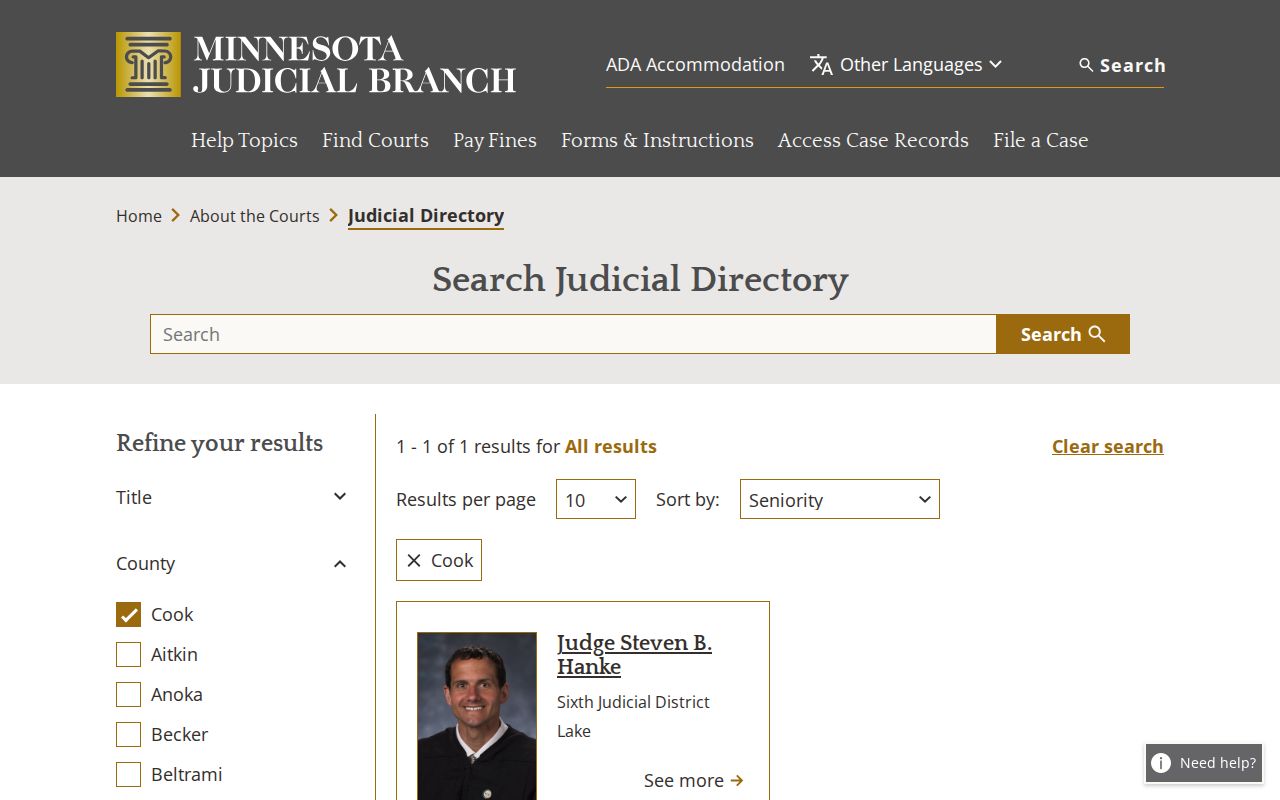
One trial court handles every docket type in Cook County. So in MCRO, select a case category only when it genuinely narrows the result. The Cook County court docket behind the filter stays the same either way.
| Court level or division | Cook County docket coverage | Primary search path |
|---|---|---|
| Minnesota District Court | Civil, family, probate, juvenile, criminal, traffic, and conciliation cases | MCRO, courthouse terminal, and Court Administration |
| Conciliation Court division | General small claims of $20,000 or less | District Court Register of Actions and Court Administration |
| Minnesota Court of Appeals | Most appeals from final District Court decisions | Separate appellate record after an appeal is filed |
| Minnesota Supreme Court | Final state review and specified direct appeals | Separate appellate record when review is available |
Cook County Court Calendar Limits
Think of the weekly public calendar as a snapshot of sessions. It is not the whole Cook County court docket. The Sixth District calendar page posts the Cook County PDF at 7:00 a.m. on business days and refreshes it each hour. Within your browser, you can search that file for a party, an attorney, or a case number. Confidential matters stay off it. Items barred from remote access do too. An assignment can also shift after the PDF goes up.
Where does the freshest daily schedule live? On paper. Printed Cook County calendars outside the courtrooms and in the public lobbies are the court's most current source, so a missing online entry never proves a hearing was canceled. Work the checks in this order: the latest notice or order first, then the printed calendar, then confirmation from Cook County Court Administration, then the online Cook County calendar, and finally MCRO Hearing Search. That sequence keeps an old or incomplete online entry from standing in for the live court schedule.
Cook County calendar check: If the date matters, use the current Cook County calendar and MCRO, then confirm the time and location with Court Administration before acting on an online omission.
How to Find Court Dates and Settings
Start with what you already hold. The case notice or citation is the best first place to look. It often shows a Cook County court date outright. Next comes MCRO Hearing Search. Use the case number if you have it. A person, attorney, or judicial officer name also works, with Cook County selected. Open Case Details and compare the Hearings section against the newer Case Events. A continuance slides a hearing to a later date. A reset is a fresh setting after a prior date changed. Older events often stay visible, so read the dates closely.
Pick up the phone next. Cook County Court Administration handles questions about a specific case or setting. The number is (218) 264-7001, option 2. Ask them to confirm the date, time, and location, and whether the setting moved. A current court notice beats a broad internet search. That holds especially when the online calendar or remote register is thin. For more date-specific detail, see the Cook County Court Dates resource. One caution: a newer future-hearing entry deserves attention. Still, Court Administration settles any conflict among notices, calendar entries, and search results.
Cook County Docket Terms
No separate local code dictionary exists for Cook County. So read the full MCRO event text instead of guessing at abbreviations. The Minnesota Register of Actions leans on familiar case-record words that still demand care. A case type labels the system category; it says nothing about the final result. An Index# or DOC ID# points to a document record. It is not a promise about the order of events. With these Cook County terms in hand, a raw docket entry turns into a sequence you can actually follow.
- Register of Actions
- The chronological record of a case's filings, proceedings, hearings, and other recorded activity.
- Case event
- A dated entry for a filing, order, notice, hearing, payment, disposition, or other action.
- Hearing or setting
- A scheduled appearance with date, time, location, officer, and matter type where displayed.
- Continuance or reset
- A change from a prior hearing date to a later or newly set date.
- Disposition
- The recorded resolution of a charge or case, including the date and available detail.
- Certified copy
- A Court Administration copy bearing a court certification or seal, not an MCRO download.
Public Access to Court Dockets
Two frameworks govern public access to a Cook County Register of Actions. The first is the Minnesota Government Data Practices Act. The second is the Minnesota Rules of Public Access. Those rules treat remote electronic access more narrowly than inspection at the Cook County record custodian's counter. MCRO simply does not show all public court material from afar. Domestic-abuse and harassment records, certain juvenile matters, civil-commitment documents, trial and hearing exhibits, and protected personal identifiers can all be limited or excluded.
Name searches have their own trap. Pending criminal, traffic, and petty-misdemeanor cases may not surface in a defendant-name search before conviction. Family material carries document-level limits too. Someone eligible for a confidential or sealed record gets special treatment. The ordinary search-and-copy process may not apply. Court Administration can explain the access procedure. A judge may have to rule on a disputed request.
Key Rules:
Minnesota Rules of Public Access, Rule 8 defines inspection, copying, remote access, and Register of Actions limits.
Minnesota Rules of Public Access, Rule 4 identifies court-record categories with public-access restrictions.
Minnesota Rules of Public Access, Rule 7 supplies the procedure for seeking access to a record not routinely public.
Minn. Stat. § 13.03 provides the public-data inspection and copying baseline, subject to judicial-record rules.
Note: A no-result screen can reflect Cook County search terms or remote-access rules, so it is not proof that a case never existed. Cook County Court Administration can confirm the next public-record step.
Cook County Pending Case Searches
Here is a common snag: searching for pending Cook County criminal or traffic matters. MCRO will not return pending criminal, traffic, or petty-misdemeanor cases without a conviction. That rule applies when the search runs by defendant name. The narrow rule leaves a gap even when the court holds a file. A complete case number, a citation number, or an attorney search works better for a public, accessible case. A courthouse inquiry works too.
Tighten the basics first. Check the Cook County spelling. Confirm the Cook County selection, and gather any case or citation number you have. Then weigh filing timing, a remote-access restriction, expungement, or an older paper-only record. Never read a missing name-search result as a dismissal. Cook County Court Administration is the right contact when a record question survives every public search channel.
Docket Records at the Clerk's Office
Cook County Court Administration keeps the District Court docket records. They cover civil, family, probate, juvenile, criminal, traffic, and conciliation matters. Minnesota runs a unified court-administration structure here rather than separate county and district clerk offices. That makes the office the local contact for a case-specific question, a public paper-file request, or a courthouse-terminal question. It also handles a copy request MCRO cannot resolve. The official Cook County District Court page lists the court location, the public-access computer, and local administration details. Call before sending sensitive material or payment. The current Cook County page posts no general records-request email and no complete mail, fax, or drop-box procedure.
Cook County Court Administration
411 W. 2nd St.
Grand Marais, MN 55604
(218) 264-7001, option 2
Monday through Friday, 8:00 a.m. to 4:30 p.m.
Cook County Certified Record Copies
Certified copies cost money, and plain ones do not. A plain Cook County copy carries no court seal. The statewide copy guidance lists it at no charge. Certification is a different animal. A certified Cook County court instrument generally runs a $14 base fee. An exemplified copy generally costs $14, and an exemplified-and-certified instrument generally costs $28. To order a certified copy, ask Cook County Court Administration. You can also follow the current Sixth District copy-request process.
MCRO downloads and search results, where offered, come free but lack certification. The Judicial Branch copy-request information spells out what separates each copy type. One caution: the base fee catalog may leave out a county law-library charge. Cook County does not publish its add-on. Confirm the full Cook County total and the current submission method before you order.
| Requested record | Statewide base fee | Use |
|---|---|---|
| Plain or uncertified copy | $0 | Informational copy without court certification |
| Certified copy | $14 | Court-certified instrument or printout |
| Exemplified copy | $14 | Signatures verifying the record's validity |
| Exemplified and certified copy | $28 | Combined certification and exemplification |
Cook County Court Docket History
Cook County blends an old courthouse with new statewide tools. The county's first courthouse went up in 1889. The present one opened in 1912 once the old frame buildings stopped being big enough. Here is a useful detail for anyone digging into court records. The former courthouse later burned. Yet the Cook County court history does not say records were destroyed in that fire. So never blame a missing old docket on the blaze without real proof. Old material may sit in paper files, microfilm, or an earlier case-management system.
New Cook County filings land in MNCIS, the statewide case-management environment. Attorneys, government agencies, and guardians ad litem file through Minnesota eFile and eServe. That system also handles service. It is not the public lookup site. Its activity feeds the tools behind public Register of Actions access. The same privacy rules apply. The official eFile page shows how the filing side works.
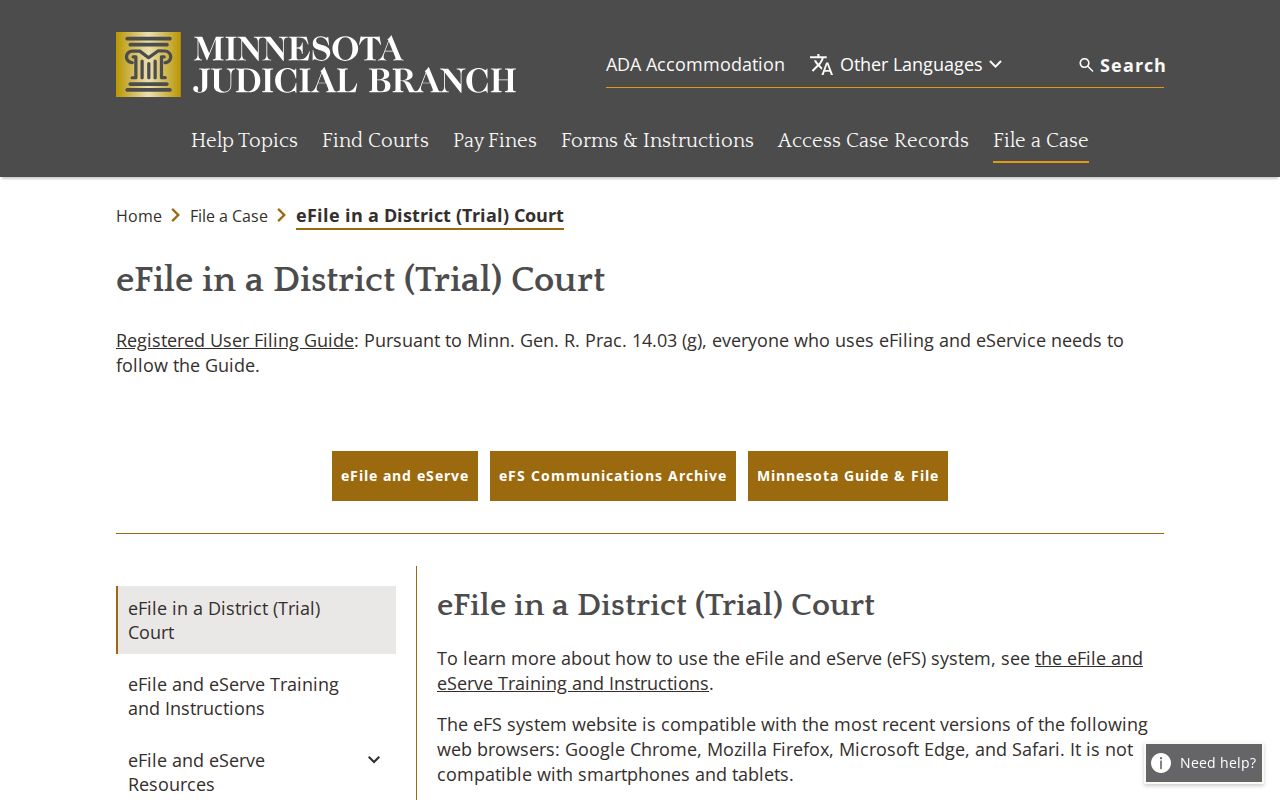
When an old Cook County court docket does not show up remotely, do not assume MCRO holds nothing. Go back to the source. The Cook County courthouse and Court Administration keep the historic record path, and they can tell you whether a file survives at all.
Cook County Court Dockets by City
Grand Marais is Cook County's only incorporated city, per Minnesota DEED. The Census counted 1,337 residents there in 2020. There is no separate Grand Marais municipal court docket or city portal. Traffic, civil, criminal, family, probate, juvenile, and conciliation matters all flow through the same Cook County District Court access channels. Those channels are used county-wide. City ordinance or parking questions are the one wrinkle. Check with the issuing department and Cook County Court Administration rather than assuming such a case does not exist.
Grand Marais Docket Search
Population 1,337 in the 2020 Census. Grand Marais cases use Cook County District Court records, MCRO, the weekly calendar, and Court Administration.
Map and Directions to the Cook County Courthouse
Cook County District Court records are kept at the Cook County Courthouse in Grand Marais, a Classic Revival building that sits on a hill overlooking the town and Lake Superior. Court Administration's entry for customers is through the main door off the parking lot, and the courthouse holds a public-access records computer alongside the Cook County Law Library. From Highway 61, the official directions go north on Fifth Avenue West for two blocks; the courthouse is on the right.
Cook County Courthouse
411 W. 2nd St.
Grand Marais, MN 55604
(218) 264-7001, option 2
Monday through Friday, 8:00 a.m. to 4:30 p.m.
Parking is a free public lot at the courthouse or free on-street parking on the other side of the building. Do not bring an item that could be used as a weapon; screening checkpoints deny such items and can confiscate illegal weapons, so allow extra time in the screening line.